|
|
|
|
 |
 
|
AI is helping the restaurant industry evolve by shifting the focus from data-centric tools to a human-centric approach by automating routine tasks and freeing up employees to engage more deeply with guests -- a move that enhances both service and the overall customer experience, writes Bob Andersen, president of The Great Greek Mediterranean Grill. "This is no longer just about generating insights -- it's about shaping decisions, guiding people and elevating the customer experience in real time," Andersen writes, asserting that AI's greatest value lies in its ability to empower people and foster genuine human connections, rather than simply optimizing operations.
|
|
 |
|
Dave's Hot Chicken has strategically integrated AI throughout its operations, implementing tools such as AI-powered drive-thru ordering, mobile order updates, customer service automation and predictive fry station robotics. Chief Technology Officer Leon Davoyan emphasizes that these technologies are designed to augment, not replace, human staff, allowing team members to focus more on guest experience while AI handles repetitive or predictive tasks.
|
 |
|
|
|
|
Sometimes layoffs are necessary, but brand damage isn't. Discover how top companies use career transition services to protect morale, culture, and reputation. Get the 2025 Improving Career Transition report and lead with empathy and impact. Download now » |
|
|
|
| ADVERTISEMENT |  |
|

|
The Cheesecake Factory's loyalty program enables direct communication with valued customers, allowing the brand to send targeted offers and reminders that encourage additional visits. Membership in Cheesecake Rewards has exceeded company expectations, with higher check averages, increased visit frequency, and the chain is gearing up to launch a mobile app. Personalized incentives, such as a free slice for lunch visits, and digital notifications via the upcoming app, are designed to deepen customer engagement and satisfaction.
|
|
|
White Castle has introduced its first Crave & Go automated kiosk at Boston Logan International Airport, offering travelers the convenience of purchasing ready-to-eat sliders outside a traditional restaurant setting. The kiosk was developed through a partnership with Just Baked, a food kiosk company, and Evolvending, a dining solutions provider. This marks the brand's first standalone Crave & Go kiosk at an airport, expanding its reach beyond previous multi-brand kiosks found on college campuses and in hospitals. The company expects to roll out additional kiosks in more travel centers in the near future.
|
|
|
|
|
See the world, build the future with Roboflow's vision AI. Enable your team to efficiently train and deploy vision models for automated quality oversight. Download the SmartPulse today! |
|
|
|
|
|

| ICYMI: Last week's most popular stories |
|
|

|
Influencers can play a key role in promoting restaurant loyalty programs by creating authentic content that resonates with their audience, as seen in the experiences of Victoria Gamrod and Sondra Robison. Both note that authenticity is crucial, that programs are easier to promote when they are simple and offer immediate value and that long-term partnerships -- rather than one-off posts -- are shown to be more effective. By sharing personal experiences and demonstrating the real-life value of rewards, influencers can make loyalty programs more appealing.
|
|
|
AI is revolutionizing food safety in the meat and poultry industry by shifting from reactive inspections to proactive prevention. AI tools, such as spectroscopy, smart sensors and computer vision, enable real-time monitoring and predictive analysis, identifying contaminants and quality issues that are often invisible to the human eye. Companies like Tyson Foods and Chick-fil-A are experimenting with predictive analytics, although its effectiveness in reducing recalls has yet to be broadly validated.
|
|
| |
 |
| (Tpg/Getty Images) |
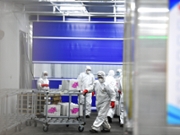
AI is transforming food logistics by moving operations from reactive to proactive management. Unlike legacy systems, AI integrates descriptive, predictive, prescriptive and generative capabilities to manage real-time data, ensuring product freshness and efficiency. AI applications in food logistics include demand forecasting, cold chain management, warehouse optimization and transportation synchronization, reducing waste and improving sustainability.
| | | | | |